Agent System Architecture
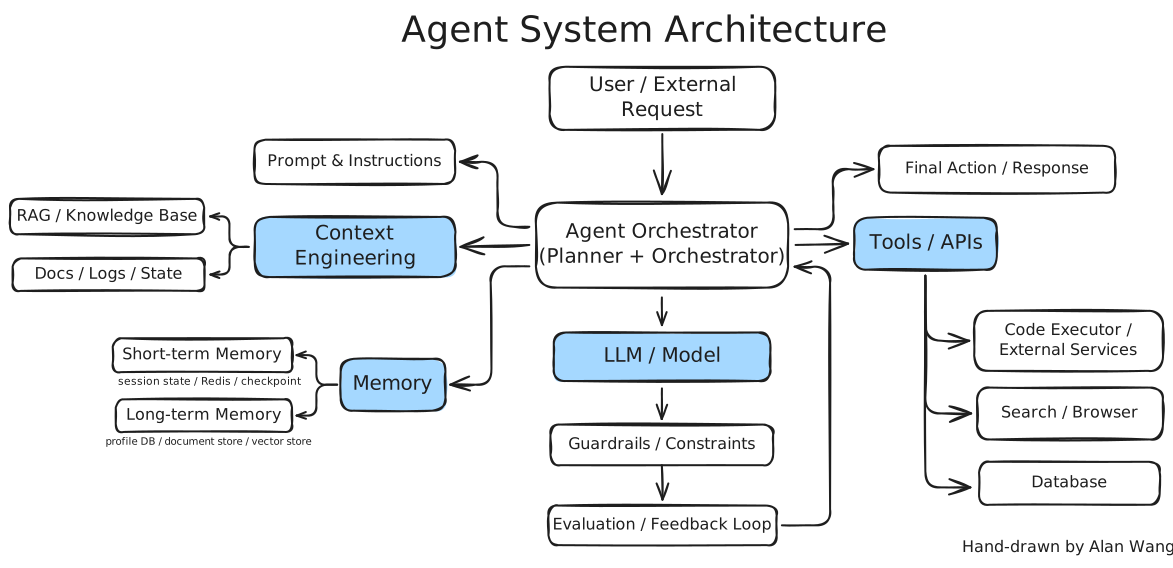
A simple overview of agent system architecture, the orchestrator and its four core components, LLM, tools, memory, and context engineering.
An agent system centers on an orchestrator (planner + orchestrator) that receives a request and coordinates four things: the model that reasons, the tools that act, the memory that persists, and the context engineering that assembles what the model sees.
1. LLM / Model
The model reasons over the current context and decides the next action or the final answer. It is the only component that "thinks"; everything else exists to feed it the right input or carry out what it decides.
2. Tools / APIs
Tools give the agent access to the outside world: a database, a search/browser tool, or a code executor and other external services. The orchestrator calls a tool when the model decides it needs one, then feeds the result back into the loop.
3. Memory
Memory splits into two kinds:
- Short-term memory: session state, Redis, or a checkpoint. Scoped to the current conversation.
- Long-term memory: a profile DB, document store, or vector store. Reusable across sessions.
4. Context Engineering
Context engineering assembles what actually gets sent to the model: the prompt and instructions, retrieved context from a RAG/knowledge base, and other docs, logs, or state. This is a different concern from memory: memory decides what gets stored, context engineering decides what gets retrieved and shown to the model for this particular call.