Three Types of Transformers
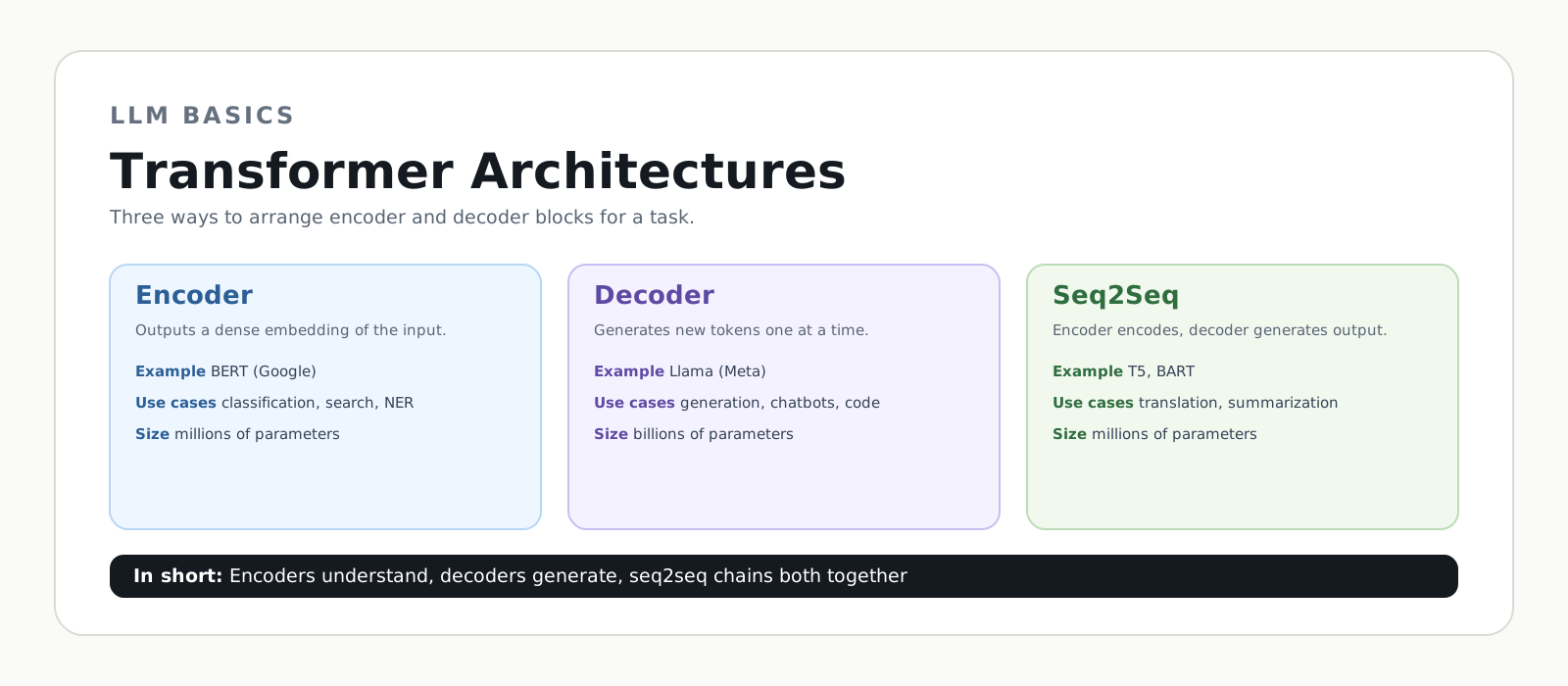
Encoder, decoder, and seq2seq transformers compared by what they output, an example model, typical use cases, and typical size.
-
Encoders An encoder-based Transformer takes text (or other data) as input and outputs a dense representation (or embedding) of that text.
- Example: BERT from Google
- Use Cases: Text classification, semantic search, Named Entity Recognition
- Typical Size: Millions of parameters
-
Decoders A decoder-based Transformer focuses on generating new tokens to complete a sequence, one token at a time.
- Example: Llama from Meta
- Use Cases: Text generation, chatbots, code generation
- Typical Size: Billions (in the US sense, i.e., 10^9) of parameters
-
Seq2Seq (Encoder–Decoder) A sequence-to-sequence Transformer combines an encoder and a decoder. The encoder first processes the input sequence into a context representation, then the decoder generates an output sequence.
- Example: T5, BART
- Use Cases: Translation, Summarization, Paraphrasing
- Typical Size: Millions of parameters