OOD Interview Answer Flow
A compact interview reference for structuring object-oriented design answers and explaining the four core OOP principles.
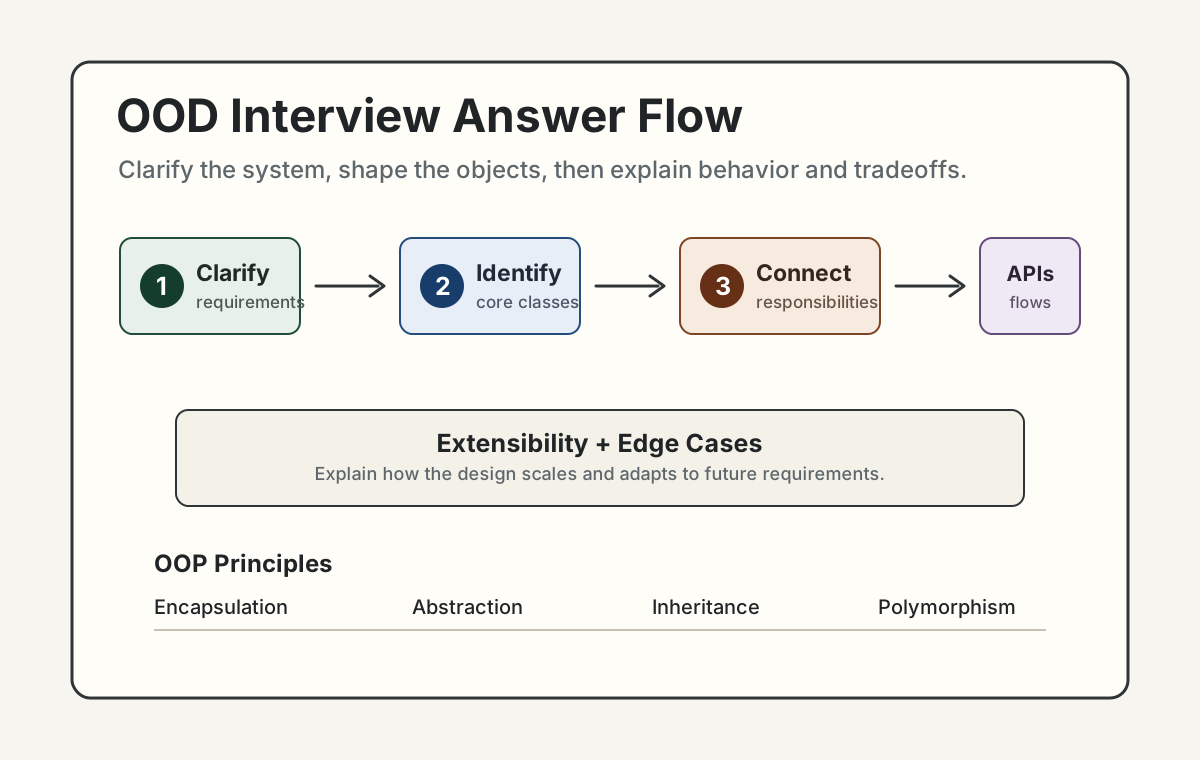
OOD Answer Flow
-
Clarify requirements
Understand what the system needs to support. -
Identify core classes
Find the main objects in the system. -
Define responsibilities + relationships
Explain who is responsible for what and how classes connect. -
Design key APIs / main flows Show the core methods and walk through the system flow.
-
Discuss extensibility + edge cases
Explain how the system can scale or support future features.
4 Core Principles of OOP
1. Encapsulation
Bundle data and methods together inside a class, and hide internal details.
Example: A
BankAccountkeepsbalanceprivate and only allows access throughdeposit()orwithdraw().
2. Abstraction
Expose only the necessary interface while hiding complex implementation details.
Example: You call
payment.pay()without knowing how the payment system works internally.
3. Inheritance
Allow a child class to reuse properties and methods from a parent class.
Example:
Car,Truck, andMotorcycleinherit fromVehicle.
4. Polymorphism
Allow the same method to behave differently for different objects.
Example:
calculateFee()may work differently forCarandTruck.